How to restore Exchange EDB file

Previous Topic Next Topic
 
classic Classic list List threaded Threaded
2 messages Options
Reply | Threaded
Open this post in threaded view
|

How to restore Exchange EDB file

carry
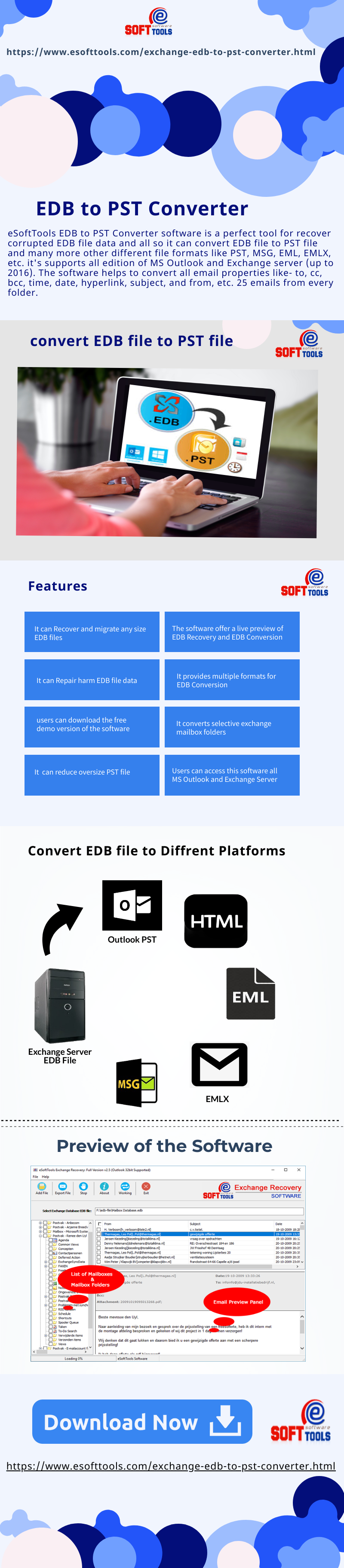
In an exchange file, you see some issues and want to restore Exchange EDB file with this heavenly eSoftTools EDB to PST Converter Software. By taking the assistance of this Free EDB Recovery programming everything clients can quickly export all the EDB file database like-emails, contacts, visits, assignments, notes, attachments, and diaries and furthermore export all its internal data to numerous working file designs like-PST, EML, TXT, MSG, RTF, MHTML and Office 365.

Get More Info:- EDB Repair Tool
Reply | Threaded
Open this post in threaded view
|

Re: How to restore Exchange EDB file

Akshay_M
Let’s see how you can use the manual method to restore Exchange EDB files.

Start with verifying the Server protection, mailbox database whether it exists or not. Create a new database by running the command – “New-MailboxDatabase” if it is not there.
Now, using the command feature, set mailbox database cmdlet to configure recovery database settings.
Now it’s time for DPM, go to DPM Administrator Console, select Recovery view, click on All Protected Exchange Data node. Finally, select the mailbox you want to recover.
On the next step in the Recovery Points section, select the data you want to recover and allot a recovery destination. Now, click on Recovery Time and finally click Recover to Continue to proceed.
Now, click on Recovery Wizard, a window with information will open, check the details and click on Next.
On the next step, select the type of recovery and click on Next.
On the next window, you will see some recovery options, select them as per your requirements and preferences. After the selection, go to the Notification section, enter the recipients for the mail and click on Send an e-mail.
On the next page, click on Close.
Now, run this cmdlet “New-MailboxRestoreRequest –SourceDatabase ’RDB-CONTROL’ –SourceStoreMailbox ‘mailbox name’ –TargetMailbox @servername.com –TargetRootFolder Recovery -SkipMerging StorageProviderForSource” to restore the mailbox.
Now, finally, delete Recovery mailbox database with the cmdlet – “Remove-MailboxDatabase -Identity ‘RDB-CONTROL’”.