How to Import/Migrate email from IMAP to Gmail accounts?


 Locked


How to Import/Migrate email from IMAP to Gmail accounts?
 
|
Do you want to easily Import/Migrate email from IMAP to Gmail accounts with the best third-party tool? So I recommend using the most powerful and effective tool that's named eSoftTools IMAP Backup and Migration Software. With the help of this tool, you can quickly Import/Migrate email from IMAP to Gmail accounts, Office 365, and Yahoo Mail without losing any data.
Get more:- Import/Migrate email from IMAP to Gmail accounts 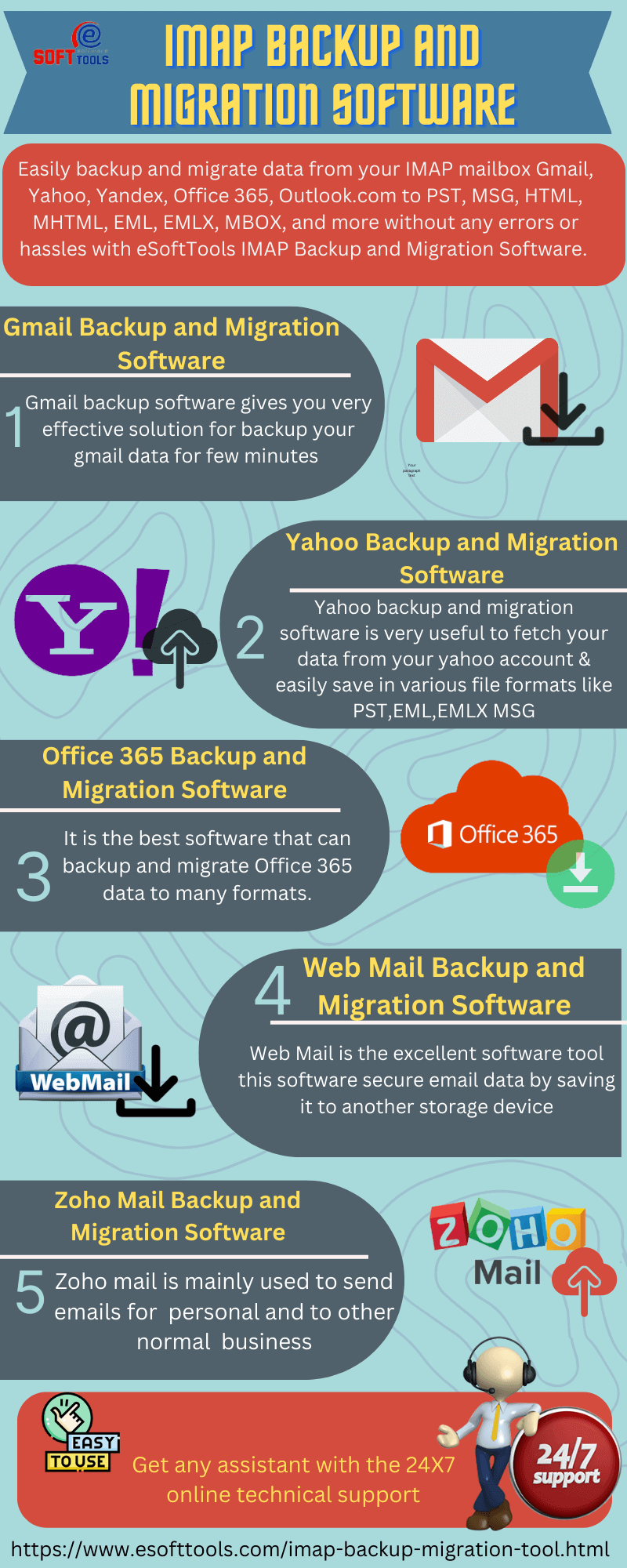
|
|
|
Migrating emails from an IMAP account to a Gmail account can be done using Gmail's built-in import feature. Here's how you can do it:
Step 1: Prepare the Source IMAP Account Backup: Before you start the migration, it's a good idea to back up your emails from the source IMAP account, just in case. Enable IMAP: Ensure that IMAP access is enabled for the source account. You might need to check your email provider's settings to enable this. Step 2: Import Emails to Gmail Log in to Gmail: Log in to your Gmail account using a web browser. Access Settings: Click on the gear icon in the upper-right corner and select "See all settings." Accounts and Import Tab: Go to the "Accounts and Import" tab. Import Mail and Contacts: In the "Check mail from other accounts" section, click on "Import mail and contacts." Email Address: Enter the email address of the source IMAP account and click "Next." Password: Enter the password for the source IMAP account and click "Next." Import Options: Choose the import options you prefer: Import Contacts: Check this option if you want to import contacts. Import Mail: Choose whether you want to import all mail or only mail from the last 30 days. Leave a Copy: You can choose to leave a copy of the imported mail on the server. Start Import: Click "Start Import." Authorization: You might be prompted to authorize Gmail to access your source account. Follow the prompts to provide authorization. Import Progress: The import process will begin, and you'll see a progress indicator. Completion: Once the import is complete, you'll see a confirmation message. The imported emails will be found in a new label in Gmail, usually named after the source email address. Additional Steps: After the import, you can organize the imported emails using labels, move them to different folders, and perform any necessary cleanup. Note: The time it takes to complete the import depends on the number of emails being imported. Additionally, Gmail might not import emails that are in certain formats, such as encrypted emails. Remember that while Gmail's import feature is convenient, it might not capture every detail of your original emails perfectly. It's a good practice to review the imported emails to ensure that everything has been imported correctly. If you encounter any issues during the import process, refer to Gmail's official help documentation or consider seeking assistance from Gmail support. |
|
|
In reply to this post by peterparker
Importing or migrating emails from an IMAP account to Gmail can be done using the Gmail's built-in import feature. Here's a step-by-step guide on how to perform this migration:
Step 1: Enable IMAP Access in the Source Email Account Before you start the migration, ensure that IMAP access is enabled for the source email account. This can usually be done through the email account's settings. Consult your email provider's documentation for specific instructions. Step 2: Log in to Your Gmail Account Open your web browser and log in to your Gmail account. Step 3: Access Gmail Settings Click on the gear icon (Settings) in the top-right corner of the Gmail interface. From the dropdown menu, select "See all settings." Step 4: Import Emails from Another Account In the Gmail settings, navigate to the "Accounts and Import" tab. Look for the section titled "Check mail from other accounts" and click on "Import mail and contacts." A new window will pop up, prompting you to enter the email address from which you want to import emails. Enter the email address of the source IMAP account and click "Next." Step 5: Enter Email Account Details Enter the password for the source email account. You can also customize the settings for how you want the imported emails to be treated. For example, you can choose whether to leave a copy of the emails on the server, label incoming messages, etc. Click on "Next." Step 6: Confirm and Begin Import Gmail will attempt to contact the source email server and verify the details. If the verification is successful, you'll be asked whether you want to continue importing from this account. Click "Start Import" to proceed. Step 7: Monitor Import Progress Gmail will start importing your emails from the source account. You'll see a progress bar indicating the status of the import. Depending on the number of emails being imported, this process might take some time. Step 8: Completion and Post-Import Steps Once the import is completed, you'll receive a confirmation message. The imported emails will appear in your Gmail inbox or a designated label, depending on your settings. Review the imported emails to ensure everything was imported correctly. You might need to reorganize or label them as needed. Please note that while Gmail's import feature is usually reliable, there might be occasional glitches or limitations, especially if the source email server has specific configurations. It's always a good practice to review the imported emails to make sure everything is in order after the migration. Keep in mind that the exact steps and options might vary slightly depending on changes to Gmail's interface over time. If you encounter any issues during the migration process, refer to Gmail's official support resources or reach out to their support team for assistance. |
«
Return to OFBiz
|
1 view|%1 views
| Free forum by Nabble | Edit this page |